Attraction · Bath · BA1 1LZ
Roman Baths, Bath — visitor guide
Built in the 1st century AD around a thermal spring at 46°C. Used for 400 years. The Great Bath is the most impressive Roman structure in Britain open to the public. Adults £22. Book online to skip the queue. Arrive before 9:30am or after 5pm to avoid the peak-hour crowds.
Practical information
What to see at the Roman Baths
The Great Bath
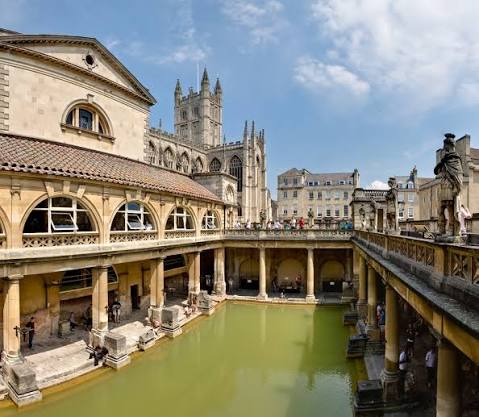
The centrepiece of the Roman Baths complex — a large open-air lead-lined pool filled with naturally heated mineral water from the sacred spring below. Built in the 1st century AD and used for approximately 400 years. The current viewing terrace, balustrade, and Victorian statues were added in the 19th century — the stone they stand on is 2,000 years old. Arrive in the first hour of opening to photograph the pool without other visitors in frame.
The Sacred Spring
The source of everything. A natural thermal spring rises at this spot at 46°C, producing 1.17 million litres of water daily. The Romans built a temple to the goddess Sulis Minerva here in approximately 60–70 AD, making this the first religious site on the hot spring. The spring produces exactly the same water today as it did then.
The Temple Pediment and Gorgon's Head
The carved triangular pediment from the Temple of Sulis Minerva — a dramatic example of Romano-Celtic sculpture, with the Gorgon's head as its centrepiece. The face is male (unusual for Medusa), and the combination of classical Greek imagery with Celtic hair and expression is unlike anything else in Roman Britain. One of the finest objects of its kind in the country.
The Gilded Bronze Head of Sulis Minerva
A striking gilded bronze head, believed to represent the goddess Sulis Minerva. One of only a few examples of Roman large-scale bronze sculpture in Britain — most were melted down over the centuries. The detail and quality indicate a skilled craftsman working in Bath in the 1st or 2nd century AD.
The Curse Tablets
Thin sheets of lead or pewter, inscribed with curses directed at the goddess — mostly requests to punish thieves. 'I curse whoever has stolen my coins' — and they name the suspects. Over 130 tablets have been found at the spring. One of the most intimate collections of Roman writing anywhere in the world: real people, real frustrations, real faith in the goddess to deliver justice.
Hotels near the Roman Baths
The Roman Baths is central — most Bath hotels are within a 10-minute walk. Book ahead for summer weekends.
The Weekend Five
This weekend's top 5 events, in your inbox Friday
Picked from the live feed. One email a week, no filler.
Frequently asked questions
How much does it cost to visit the Roman Baths in Bath?
How long does a visit to the Roman Baths take?
What is the best time to visit the Roman Baths?
Can you swim in the Roman Baths?
Is the Roman Baths worth visiting?
Advertisement